FERRARI LUCE, a designer’s point of view
I'm an italian engineer, buildings and footwear designer, I live 30 km away from Ferrari's factory, and I've been raised contemplating its mith, but also studying and learning about design and functionality.
After a few weeks since its presentation, here is an overview of what I've seen and learnt about Ferrari's newest car, plus my personal opinion.
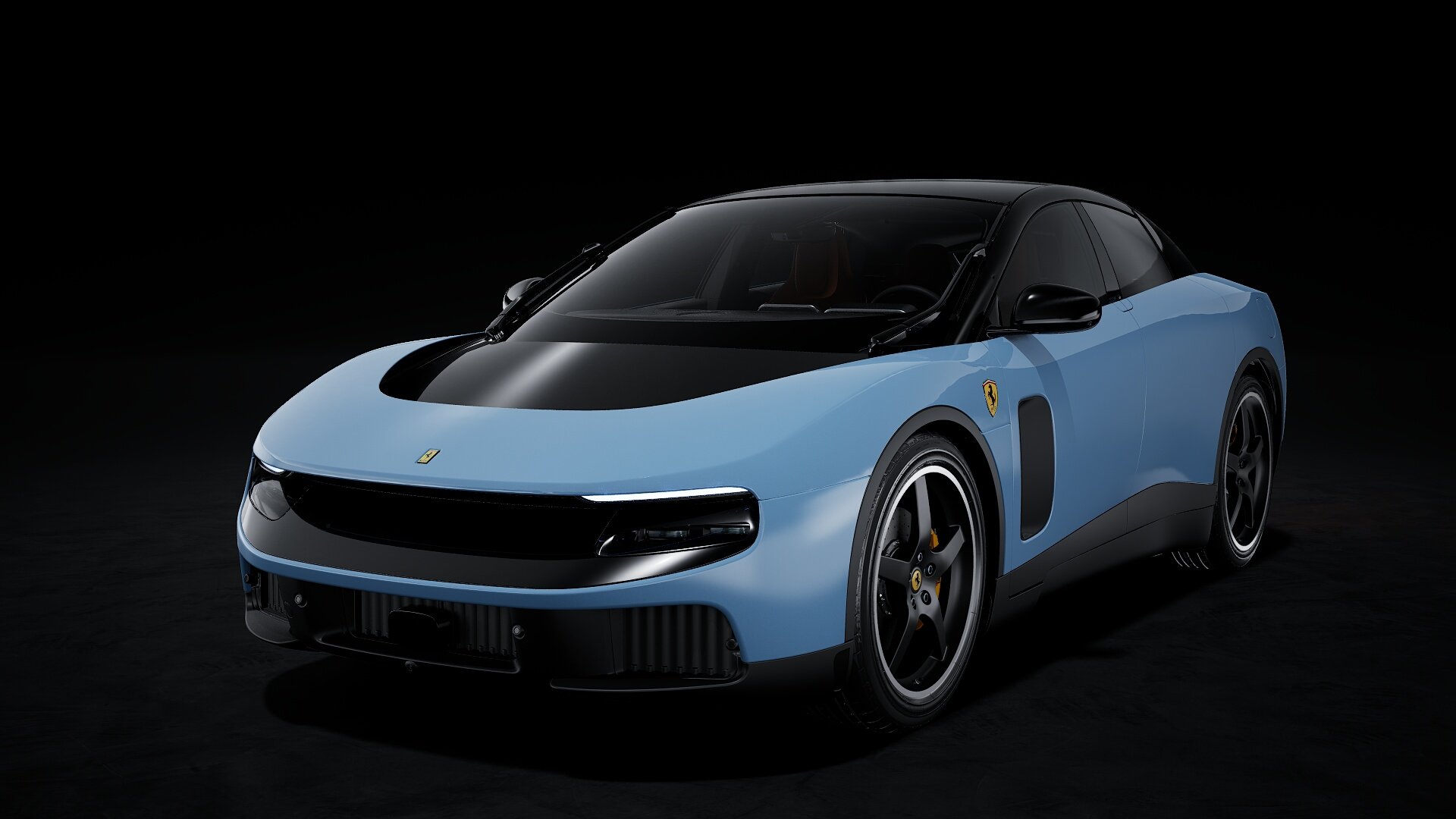
Ferrari Luce
1. The social reactions
By far the Luce launch has became the most insane, hugest and globally extended social experiment ever!
The number of comments and contents, the interest shown, the contrast among passional and rational opinions, the silence of 50% of human genre...for a designer like me, this is just a fantastic playground to study and learn, to understand myself and people in general.
At this point the majority of comments are all judging the Luce as a flop, in terms of design and in terms of detachment from the brand history. Many ironic memes have been created, funny jokes are all over the internet.
Everyone from kids to adults, from everyday people to designers, in all the countries of the world, seem to have the same idea of what a Ferrari IS NOT...the Luce!
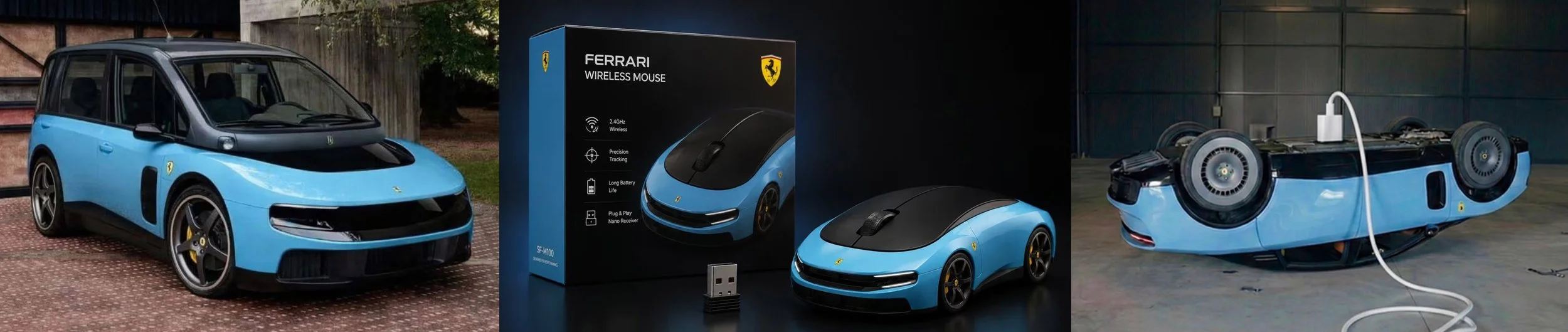
Some of the memes created on the socials to represent the Luce
On the other hand, women's comments are very rare, if not non existent! This is funny too, because we often judge women more passional and less rational than men, but in this case they simply don't care! Looking into this little amount of comments posted by female public, it seems like positive comments are almost as many as negative one.
So this insane amount of feedback just seems a male only disorder, plus, it’s interesting to note that all this heat has been generated before no one has still posted a driving review of the car!
2. The brand
Ferrari’s branding as appearing in some older cars
The incredible amount of passional reactions shows us how deep is people's love with the Cavallino’s brand and its products.
Scuderia Ferrari was born as racing team, employing Alfa Romeo's car. Then it started producing it's own racing cars.
At a certain time, Enzo Ferrari started to sell road legal cars to fund and support his racing team.
Nowadays racing activity is still vital to the brand, keeping alive the glorious past, but it has became a sort of marketing tool to promote the sale of (new and used) cars, luxury goods, fashion collections, toys, merchandising, etc.
A whole, well structurated, system, carefully put together to create one of the best, if not the best, luxury brand in the world, living on the heritage of heroic times car racing, beautiful design standards, the powerful sound of their engines, deep emotions and a present of excellence in whatever activity they work on (a few more F1 titles would be appreciated too…).
By the way, the insane feedback we are seeing these days is showing us that, rather than a commercial brand, Ferrari is universally perceived as a religion, with millions of persons devoted to it!
3. The electric car challenge

Around 2020s, following post covid climate concerns, most of luxury car manufacturers started their own projects to create electric vehicles.
As far as potential customers’ interest started to cool off in the following years, the likes of Lamborghini, Pagani and Rimac (the brand that actually created the first pure electric hypercar) withdrawn from their electric programs, Ferrari steadily kept pursuing its own way.
What did they know that their competitors missed?
Ferrari, like other brands, keeps a very detailed database of their customers. If you want one of their premium cars you need to undergo to a very strict fidelity policy, where you have to buy certain “basic” models to successively be allowed to buy superior models.
So, in Maranello, they know everthing about their customers preferences and tastes, they also know where potential new clients could be found.
Also being the biggest and most famous of these luxury cars brands helps them to have a wider, more diversified customers base, allowing them to absorb the high costs of developing a completely new performance electric platform through the sale (and pre-sale) of a proper amount of units.
The absence of Ferrari’s competitors also opened a big opportunity to establish itself as a reference for a new product segment and enlarge its customers base even more.
4. Project constraints, target customers
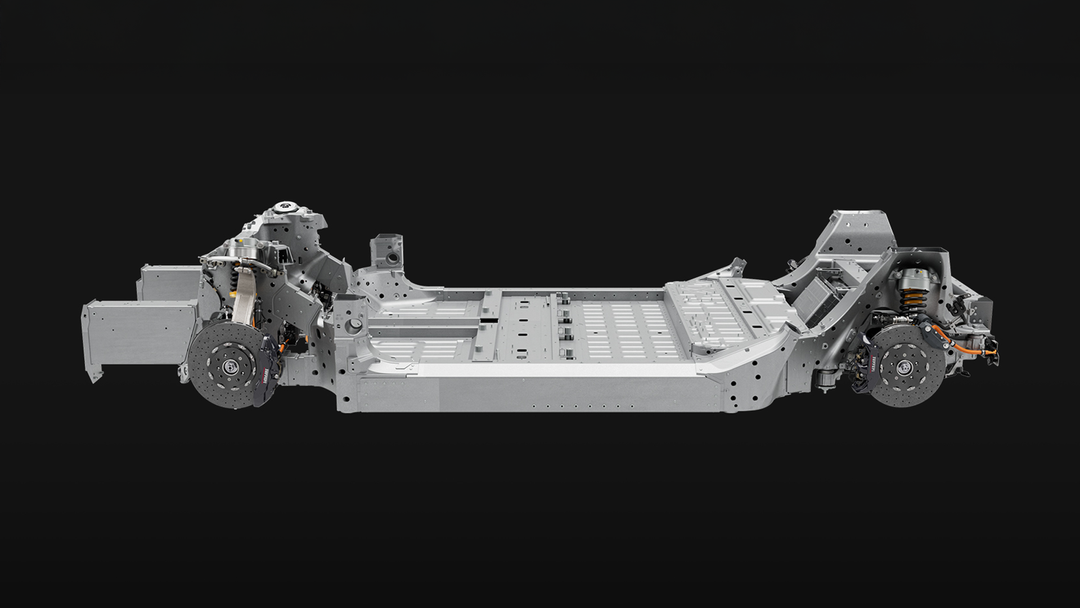
Ferrari Luce - the chassis
The choice of building an electric car brings with it a ton of functional constraints.
While deciding the form factor/proportions of the car you need to think that to build a proper Ferrari the power should be very high, so, to have an adequate autonomy, battery pack has to be huge...which carries a lot of weight to the car, probably above 30% of the total weight of the car (easily exceeding the 2 tons). That means that it won’t be as nimble as a traditional Ferrari GT or hypercar.
To maximise performance, the batteries have to be placed as low as possible, and they have to be spread on the widest surface possible, to reduce their thickness...so a wide and long chassis is necessary.
Even with all these attentions, with current battery technology, the base of the chassis resulted in around 20 cm of thickness (judging from the pictures), consistently elevating driver’s and passangers’ seats from the ground.
Considering all these starting restraints, the only way to create a top performing electric car had to be by selecting very big, SUV sized, vehicle.
This decision considerably shrinked the clients base but helped define the project even more.
On the other end, the idea of making a comfy 5 seater SUV also allowed Ferrari to distance this new project even more from its current and past product range, creating a whole new category, theoretically capable to shine of its own light (...).
In future perspective, such a big gap from Cavallino’s traditional models to the new electric vehicle silo creates a big empty space that could be used, sooner or later, to insert new models with specs, features and style, ranging in between.
At last, the aforementioned reasoning, to justify the choice of a SUV-like form factor for the upcoming electric model, perfectly matches with the fact that the 2 seater hypercar clients, those who are looking for petrol engine’s power, sound and emotions, are not interested in an electric 2-seater hypercar, just as testified by Lamborghini’s, Pagani’s, Rimac’s electric hypercar projects shotdown, clearly indicating that the choice of a different form factor won’t bother 2-seater purists that, nonetheless, will continue to receive newer, specifically addressed, products fueling their passion...but, maybe, they could also be among those interested in buying a different Ferrari, a calm one, a smooth one, still dangerously fast, but with totally different functionality!
The new elctric platform will have its own space and its own target clients.
5. The style
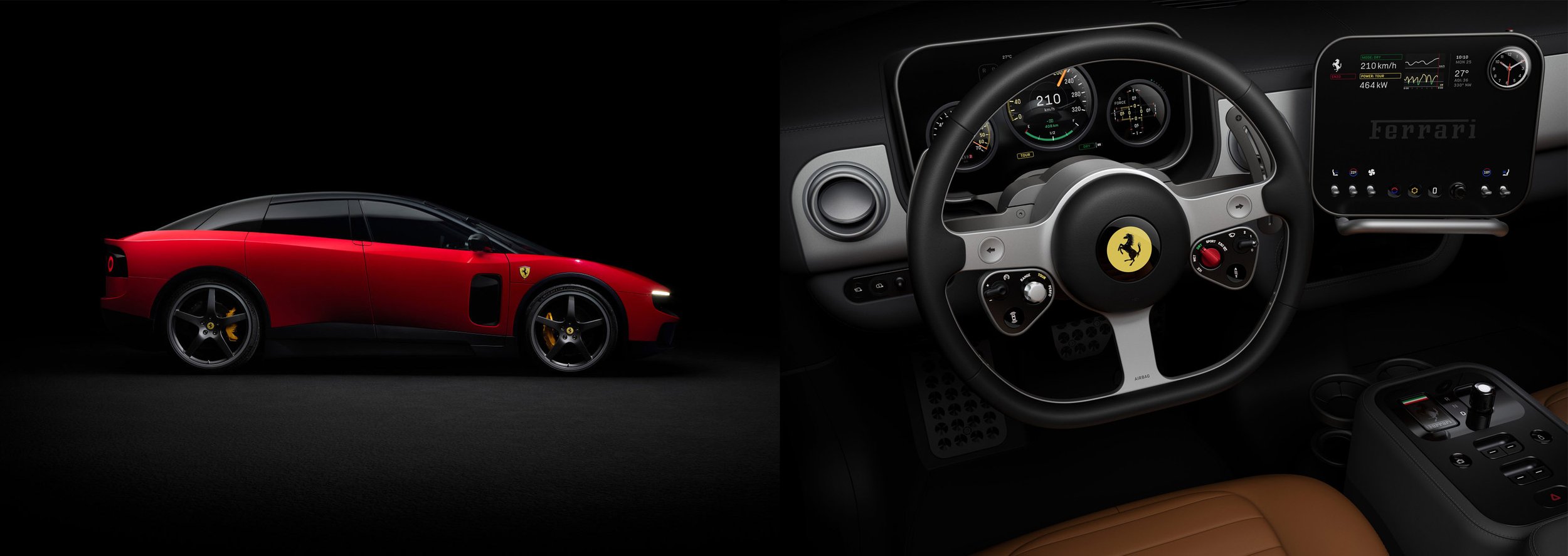
Exterior and interior design
Finally, the most controversial side of the new Ferrari Luce, its design.
Ferrari, at first, cautiously unveiled the mechanics and the tech of the car, then some elements of the interior design were shown and, after a few weeks, the exterior design was presented to the public.
Given the new nature of this project, Maranello’s managers decided to really follow the “form follow function” principle, to keep product authenticity, instead of using their own Centro Stile, they hired some of the best product designers in the world, LoveFrom collective, aka Jonathan Ive and Mark Newson’s founded studio, clean from car's world stereotypes.
Just at first sight, the exterior design looked shocking.
The surprise was artfully empowered by keeping the actual shape of the car completely covered and masked during the whole road testing process, well documented by social media car paparazzi, until to the very last minute.
The Luce shows unexpected and unprecedented proportions for a Ferrari, surfaces looks very clean and rounded, the style doesn’t show any sign of aggressiveness.
The design revolves around the concept of a glass like inner core, containig the cabin and the electro-mechanic parts, with an external bodywork covering the front, the sides and the back portions of inner core, for aerodynamic and safety functions.
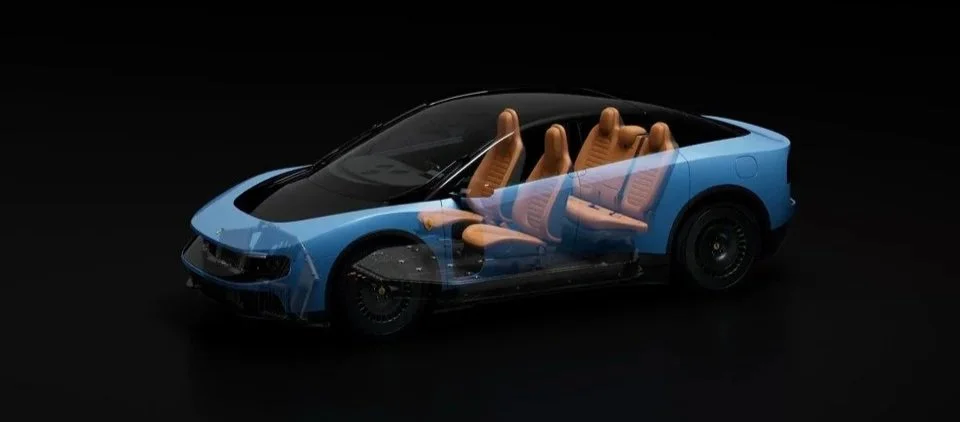
Exterior design concept - glass inner core (black part) and external cover (blue part)
The one single recall from the past are the four circular led lights at the tail.
The interior, the strongest point of Ive and Newson duo, looks really clean and functional, somehow retro inspired. The use of phisical buttons instaed of touch panels has been approved by everyone, while it’s easy to see an iphone/ipad inspiration on the style of the instruments.
The ample space available inside the cabin allowed for a Ferrari history-first five seater configuration.
Even the choice of the non red launch colourway (La Plata blue was the selected colour) was intended by many as a clear sign of detachment of the Luce project from the traditional Ferrari models.
Reading fans social media comments and posts, listening to people here in Modena, the common reaction is that Luce doesn’t look like a proper Ferrari. Whatever thing they feel it is a proper Ferrari, that one in not the Luce.
Among the design community the most frequent reaction is the same.
The majority of car designers say it lacks of proper car proportions (wheelbase, front and rear overhang, height, etc) and it’s evident that who designed it is not a car designer.
Car designers also point out the fact that luce looks static, like a scuplture, while it’s a common practice for them to look for an enhanced dynamic feel, obtained with the a studied combination of curved and tense lines.
Some appreciate the research for a more understated look but say the result is on the banal side, lacking of a more radical rendition or needing work in finding more interesting details.
That said, some other designers, like italian legend Giorgetto Giugiaro, while not being completely sold by the design, also praises Ferrari for having the guts of exploring new techs and style, without the fear of failure.
6. My personal opinion
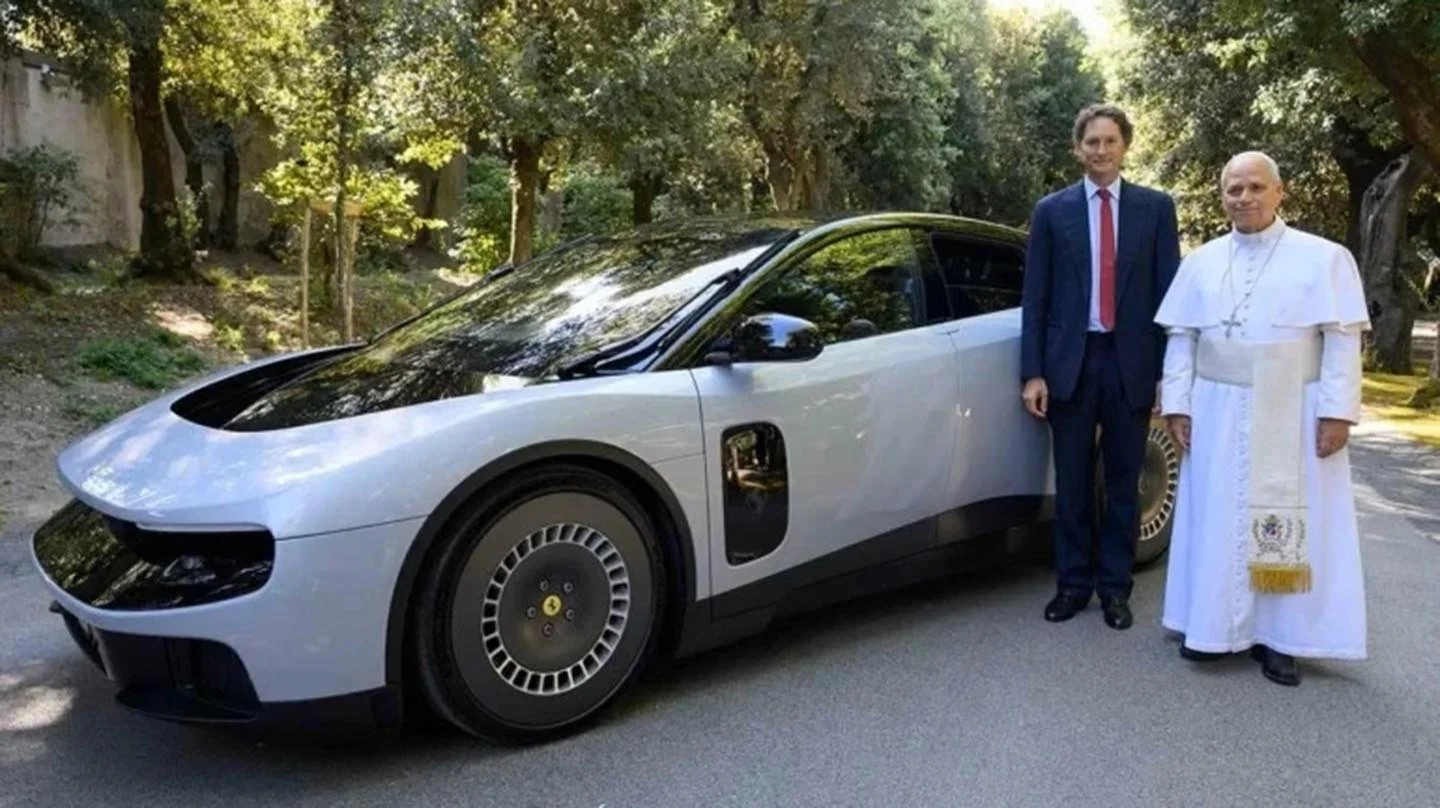
Ferrari’s chairman, John Elkann, presents the Luce to Pope Leo XIV - note real car proportions
Once Ferrari started talking about this EV project, it was clear to me that the style had to be really different from their current and past range, I hoped that.
I think that a change of style was necessary for two reasons:
being an electic vehicle, for consistency reasons, the design has to highlight different aspects of the project. I.e. you don’t have a sculptural engine to show through a cool glass window on the back of the car or you don’t need spectacular air intakes to cool it down;
car design in general and hypercars design, in particular, has recently got too much into complex forms, so, simpler, cleaner and more organinc shapes were necessary anyway.
So, once final design was presented I was kinda speechless, as everyone, because, even if I was actually expecting a radical change, I didn’t imagine this specific form factor and this particular style.
To be honest, while weeks are passing, I'm starting to appreciate it.
After seeing all social media designers presenting their mock ups, I can see the original design has some kind of purity that mock ups don't have, even if they lower the car (making it even bigger!) or if they add air intakes or spoilers to make it look more like a proper Ferrari.
As suggested by other designers on Core77 Boards, it’s interesting to note how the car looks when compared to humans, in particular seeing the picture above, of the presentation of the Luce to Pope Leo XIV.
So, to better understand it’s proportions, I’ve made a quick comparison to it’s main SUV rivals and to the mid ‘80s Ferrari Testarossa, just an opposite extreme of the Luce.
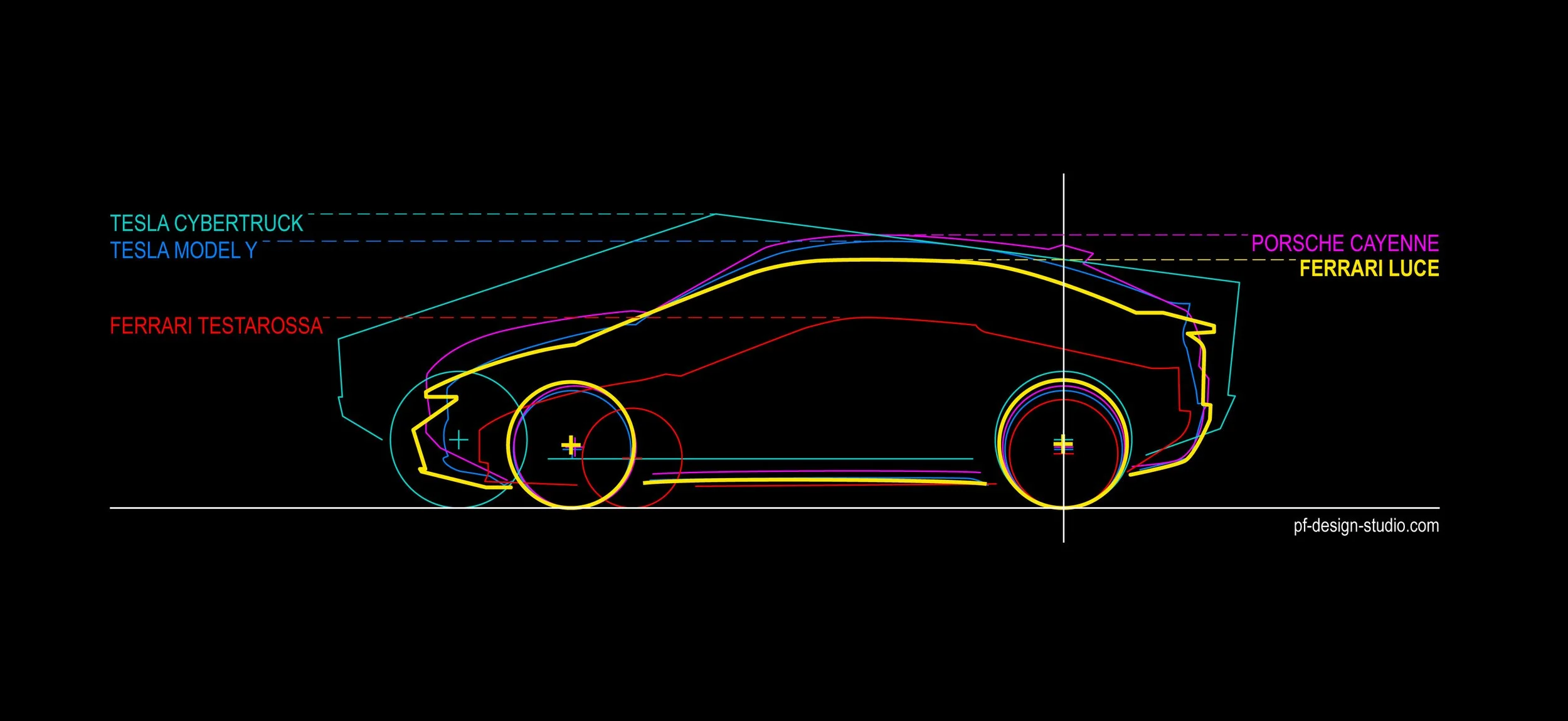
Ferrari Luce - stance comparison
My picture shows that the Testarossa, at one side, and the Cybertruck, on the opposite side, just belong to completely different categories, if compared to the other three cars, but you can see how the Luce, in particular, just stays in the middle between them.
Ferrari Luce, Tesla Model Y and Porsche Cayenne have almost the same exact wheelbase, Cayenne and Model Y have almost the same profile, except the front of the Model Y is a lot lower.
Cayenne and Luce share same body width, while the Model Y is sligthly narrower; so, since Luce silhouette is way lower than both of them, frontal and rear overhangs are bigger and wheel diameter is bigger too, it also has the more dynamic stance among all of these three models.
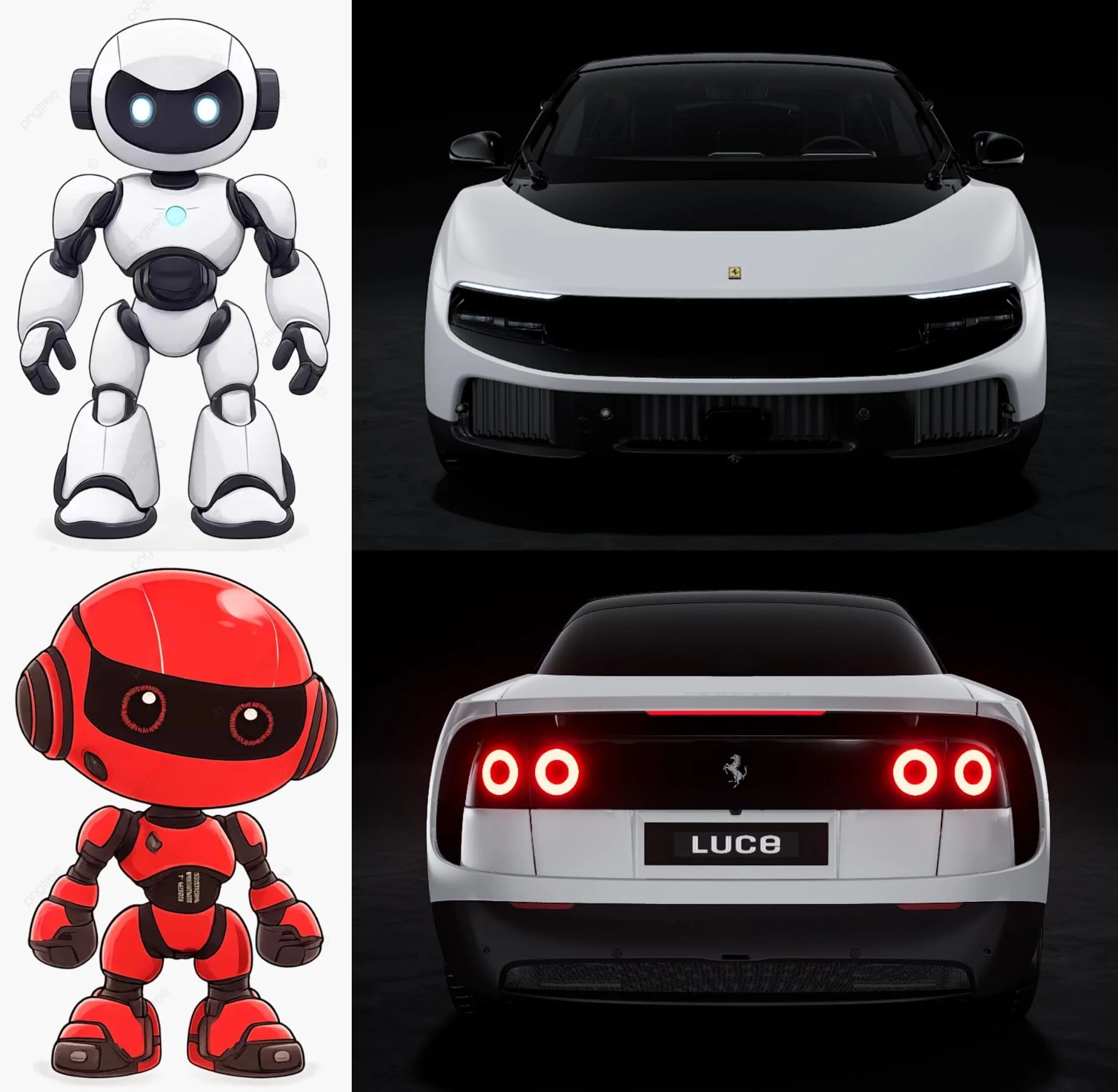
Japanese robots and Ferrari Luce
Another funny consideration came once I’ve thought that, often, car’s frontal view resembles a human face, where lights are the eyes and the ghille is the nose/mouth; the expression of this “face” generally offers the feel of the car’s aura and soul.
While looking at the Luce, to me, the frontal view didn’t look like a human face but, instead, it seemed like a funny japanese robot’s face, just like the tail view, with the rounded red led lights.
This funny, playful feeling also helped me to establish a closer relationship with the style, having, maybe, a better understanding of one of the possible souls of the project.
All this said, I’m even more curious to see the Luce in person, to finally evaluate the design, see the proportions and check all the details.
For sure, I’m very proud Ferrari decided to completely explore this new car segment with a distinctive style and world class engineering level.
I’m also sure that Ferrari’s choice will be a fantastic opportunity for the future of automotive design, and industrial/product design in general, to move on and look for new styles, more in tune with current fast changing world.
While we still have to keep dreaming, we also need to stop lying, making product that don't represent where tecnology and human race is heading to!